Wednesday, September 17, 2014

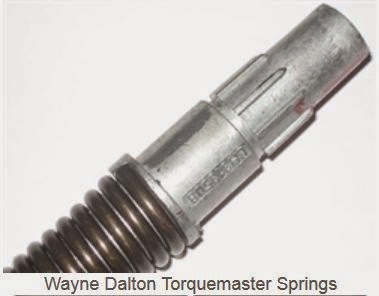
Wayne Dalton Torquemaster Original Replacement Garage Door Spring

Is your garage door making too much noise or not functioning the way it used to? Before you make moves to replace it completely, check on the condition of your garage door springs. Garage door springs are responsible for the lowering and raising of your door. If you are having trouble with your garage door, it is most likely due to the springs. It is important to regularly check on the maintenance and well-being of your springs because they can be rather temperamental and break.

A great product that won’t let you or your garage door down (unless you want it to) is the Wayne Dalton Torquemaster Replacement garage door spring. With the Wayne Dalton garage door replacement spring, you are assured quality and value. The spring is made with great innovative technology and is sure to give you faultless service year after year. So you won’t have to replace your garage door springs very often. In addition, each Torquemaster spring comes with winding and stationary ends already installed and a protective plastic sleeve making it easy for you to replace the old springs. Also, the Torquemaster springs work with all Wayne Dalton Original Torquemaster garage door spring systems.

The Torquemaster spring is easily the safest counter balance spring system on the market. It also provides the smoothest and quietest operation over any other garage door spring.

What are you waiting for? Get your Wayne Dalton Torquemaster Replacement Garage Door Spring today from Star Door Parts for just $48.97 and save on all the repairs and maintenance.

Tuesday, September 9, 2014

When Should You Replace Your Garage Door?

Don’t wait until it’s too late. Replacing your garage door after it has fallen off the hinges or starting to rot can not only be expensive and rushed but also can lend a hand to even bigger problems down the road. But how do you know when the time is right to replace your garage door without the risk of waiting until the last minute? And what benefits can replacing your garage door have on your home? Here are some tips to help you pin point when it just might be time to take the leap into new garage door-dom and just how a new garage door can change the whole feel of your home.

Maintenance

If maintaining your garage door’s aesthetic as well as its functionality has become overwhelming, it may be time to scrap the old door and upgrade. If molding or rotting is becoming an issue it is definitely time to get a new garage door. Mold can cause serious health issues within the home and rotting is a serious safety concern as it makes the garage door weak and undependable. Buying a metal garage door instead of a wooden one can help you avoid rotting in the future.

Increase Home Value

It has been proven that replacing your garage door will enhance your home’s curb appeal. According to a 2010 report, garage door replacement is the second most important remodeling project in regards to return on investment. It can significantly increase the market value of your home at the time of sale. Also, putting up something new and modern will help impress any potential buyers.

Enhance Appearance

A new garage door can drastically improve the look and feel of your home. Even though it is only a small part of your overall house, your garage is probably the first thing people will notice as they walk in. In today’s world, garage doors come in a variety of colors, styles, and finishes for you to choose from. You can take advantage of these options and transform the way your home looks.

Safe Storage

Older garage doors are made from wood or metal that does not have the right insulation and are much easier to break through. A new garage door will definitely help keep your belongings safe from bad weather and intruders. Also, a new garage door will provide better insulation and prevent moisture in the garage which will help with the storage of your belongings.

Limit Home Access

In addition to securing your garage, a new door will also provide security for your entire home. The easiest way for thieves to break into your house is through the garage. Most new doors come with a heightened level of security and use new sophisticated coding systems that makes it impossible for thieves to break through.

Sometimes buying and installing a brand new garage door isn’t always the best option for every home. At Star Door Parts, we sell garage door replacement and repair parts and accessories for quick fixes or simply to enhance the look of your current door. Our garage door hardware can make any door look brand new. If you decide a full replacement isn’t necessary, contact us or your local garage door technician to find the parts you need to find the exact parts you need.

Monday, August 25, 2014

Garage Door Security

In order to ensure the safety of you and those you love, it is important to practice proper garage door safety. After all, you do not want to leave your home vulnerable to robbers, causing you countless problems in the process. By following some of the security points described below you are ultimately protecting your home from any possible threats.

Do Not Leave Your Remote in Plain Sight

To make sure that your home stays secure, you do not want to leave your garage door remote in any place where someone passing by can see it. This is especially true when it comes to those who leave the remote in their car. That's because if your vehicle ends up getting broken into, these robbers now have complete access to your home as well. The best way to prevent this problem from occurring is by simply buying a keychain style remote instead.

Remove Your GPS Device after Use

When it comes to your GPS device, you should always put it away after you are done using it. Whether you are parked at a school event or a shopping mall, if a thief breaks into your car and takes your GPS, all they have to do is hit the "home" button, which will lead them to an empty house where they know you won't be for hours. If for whatever reason your transmitter does get stolen, immediately clear any codes that are found in your opener. Once you do that, the stolen device will become ineffective.

Lock the Door That Sits Between Your Garage and House

Another safety measure you should take to prevent intruders cutting through your garage to get into your home is locking the door found between your garage and house. In fact, we recommend using a deadbolt there. Besides this, you also want a door that is super study, like you would have for your front door. Typically, a steel door works great for this purpose. You may even want to invest in a door that comes with a wide-angle peephole so that you can peak into your garage from the comforts of your home if you hear any startling noises.

Don't Forget to Close Your Garage Door Properly

The last thing you want to do is make it any easier for a criminal to break into your home. That is why you have to make sure that your garage door is fully shut every single time you leave your home or when you call it quits for the night. Today, there are a bunch of products on the market that help you tell if your garage door is open or closed from anywhere in your home.

Installing locks on the actual garage door assures that you will not have intruders simply lifting the garage door while you aren’t home. Just because you use a remote to open the door normally doesn’t mean someone can’t physically open the door without it. A good lock is the garage door locking lever handle from Star Door Parts.

Another good alternative is having a garage door security keypad set up on your door. In this scenario, only someone who knows the code can enter the garage. This is perfect for working parents whose children may need to get into the house while parents are still out.

You do not have to feel helpless to robbers and thieves any longer. By taking part in the proper garage door security, you are protecting your belongings, and those you love, from any dangers that may be lurking.

Tuesday, August 5, 2014

Different Types of Garage Door Springs

Acting in the same way counter weights have been used to balance doors in previous generations, so garage door springs act as counterbalance to the weight of the door. While there are many varieties, there are two main types: torsion springs and extension springs. No matter the design, each one works to ease the process of opening and closing both manual and electric garages/garage doors.

Torsion Springs

The springs are attached to a metal shaft that is installed above the garage door. It applies torque to the shaft with drums at each end, and attached to each drum is a cable that is fixed to the bottom of the garage door. As the spring unwinds and winds, it creates a balance system for both opening and closing the door.

Standard: The most common, standard torsion springs generally use two springs mounted to the spring anchor bracket along the top of the garage. Two springs are more popular as it prevents damage and injury should one of the springs break.

EZ-Set: These springs are attached to winders at the end of the shaft instead of the middle.

Wayne Dalton TorqueMaster: The safest spring system available, the springs are enclosed on the inside of the torsion shaft and are held in place by a winding cone. Unlike other springs, they can only be wound by the use of a power drill. Cable drums support the ends of the shaft. The Torque Master is also designed to sit about 2” higher than the supports so as to keep the cable from wear due to rubbing against rough material. One of the best features is a hook that is afixed to the wall in order to support the center of the shaft.

Standard Commercial: While the commercial springs come in a wide array, all follow a basic linear system in which four or more torsion springs are fitted along the shaft. Because of this design, it makes them ideal for wider doors generally used by manufacturers.

Steel Rolling Door: The steel rolling doors are comprised of interlocking slats that wind around a barrel as the door is raised. Inside of this barrel is the torsion spring.

One-Piece Curtain Door: Used by most self-storage units, one-piece curtain doors are almost identical to steel rolling doors with the only difference being the one-piece door is made from a single piece of steel.

Garage Door Extension Springs

Usually mounted along the side of the garage door, each spring stretches and contracts to act as the counterbalance. Residential garage doors generally only have two springs with larger, commercial garage doors requiring more.

Sectional Garage Door: The extension springs on this door go both above and parallel to horizontal tracks and counterbalance the door weight by pulling on cables. When the door closes, its weight is transferred from the track to the cable.

One-Piece Garage Door: Like the one-piece curtain doors of the tension springs the extension springs operate as one unit. As the door opens, the top moves along a track inside of the garage while the outside starts to stick out. The springs, attached to a connecting point, serve to counterbalance the additional weight.

Garage door repairs are dangerous and you always need to wear safety glasses,gloves and use the proper tools when working on your garage door. If you do not feel comfortable performing the repair or are of unsure of the procedures, always call your local garage door technician.

Wednesday, July 16, 2014

Cleaning and Caring for Wood and Metal Garage Doors

It's easy to take a functioning garage door for granted. Without occasionally cleaning it and performing a few basic maintenance tasks you're likely to wind up with a major repair bill. When garage doors are neglected for too long, they sometimes even need to be replaced. The good news, though, is that caring for and cleaning a garage door is simple. Wood garage doors require a bit more care, but even so, they're easy to maintain too.

A Special Note about Wood Garage Doors

Most garage door care and cleaning tips apply equally to wood and metal models. However, there are a few special things to keep in mind regarding wood garage doors. Above everything else, they need to be finished properly. Film finishes like varnishes and paints look great at first, but they don't tend to withstand the elements too well. It's far better to finish a wood garage door with a penetrating finish like oil or a stain. Prior to finishing your garage door, clean it thoroughly with a mild solution and then scrape it and sand it so it's as smooth as possible. Never power wash a wood garage door, and make sure to finish both the exterior and interior to keep water damage, insect damage and other issues at bay.

How to Clean a Wood or Metal Garage Door

As long as your wood garage door is properly finished, you can clean it using the same process as you would a metal garage door. Use these steps:

  • Wipe down the door with a soft, dry cloth to remove dust, dirt and other debris.
  • Prepare your cleaning solution. Use one cup of a non-toxic, biodegradable cleaner containing 0.5 percent phosphate or less mixed with two gallons of warm water. You can also use one cup ammonia mixed with five gallons of room-temperature water.
  • Apply the solution from the bottom of the door to the top of the door using a sponge, soft-bristle brush or clean, soft cloth.
  • Remove stubborn mildew and/or fungal growths using a mixture of one cup bleach, five gallons of water and one cup of mild soap.
  • Rinse down the door with clean water. You can then either dry it with a cloth or allow it to air dry.

General Garage Door Maintenance Tips

  • Twice a year, visually inspect your garage door and its components. If you notice signs of wear and tear or other damage, have them addressed promptly.
  • Vacuum and/or wipe down garage door components to ensure the ongoing proper operation of your metal or wood garage door.
  • Use a garage door spray lubricant to keep bearings, hinges, rollers and tracks in good working order.
  • Check the springs to ensure that they're sufficiently "wet," or lubricated, and lubricate as needed.
  • Also, check the chain to ensure that it is properly greased. If not, grease it to keep it from experiencing mechanical issues.
  • If you have an automatic opener, you might want to have a professional garage door company examine it once a year or so as well.

Friday, July 11, 2014

Weatherproofing Your Garage

Garages that exist beside or under a home may keep you dry on a rainy day, but in their natural, unfortified state they also have a nasty way of allowing cold air, noxious fumes and even carbon monoxide to enter the living space. Fortunately, weatherproofing can solve the problem, and although it may seem intimidating, the job is something most homeowners can easily manage on their own.

Weather-stripping Your Garage

Weather-stripping is vital for keeping out drafts. After dealing with the windows, turn your attention to the door. While the careful installation of side, top and bottom seals is imperative, you might want to consider adding a garage door threshold as well to ensure a tight closure that eliminates drafts.

Venting Your Garage

To prevent the buildup of mold and mildew, you must provide excess moisture with a means of escape. You do this by installing a few vents.

The right-sized vents for your garage will measure at least 6 inches in diameter. Be sure that the ones you purchase come equipped with outside rain caps and adjustable inside diffusers to control the flow of escaping air.

To install your garage vents:

  • Select at least two appropriate locations on opposing exterior walls.
  • Position exhaust vents as high on the wall as possible. Intake vents can go lower.
  • Cut holes according to the manufacturer's instructions.
  • Install each vent from the outside in and caulk around the edges.

Insulating Your Garage

With the vents in place, it's time to get started on the insulation. Part of this job entails choosing the appropriate material. While fiberglass will serve under most circumstances, those who live in fire-prone areas might want to consider the flame-retardant properties of rock wool instead.

To proceed with the installation:

  • Remove any existing paneling or drywall.
  • Seal large holes and cracks, paying particular attention to the walls’ lower sections.
  • In an attached garage, install the insulation backwards with the vapor barrier facing away from you and toward the home’s interior wall.
  • Finish with plywood paneling on the walls and under the roof. Do not use drywall inside your garage.

Weatherproofing Wooden Garage Doors

While garage doors that are made of wood present an attractive appearance, they will always require extra protection from the elements. To fortify yours:

  • Apply acrylic latex caulking around each panel.
  • Paint or stain both sides and all edges.
  • Consider adding foil-type insulation to assist in moderating inside temperatures.

In addition, if your garage door measures wider than 12 feet, stabilization with a sag eliminator will keep gravity from pulling it into a permanent smile. There are better ways to greet your neighbors.

Enjoy Your Weatherproofed Garage

While weatherproofing your garage may take a few weekends, the benefits will soon be apparent. In addition to protecting your vehicles, keeping toxins out of your home and limiting loss of interior heat, you will have increased your property value. You may even find yourself using the garage as additional living space.

In the end, the numerous advantages of a weatherproofed garage are sure to make the time spent getting it that way more than worth your while. If you are looking to take on this DIY project, you can find all the necessary tools and parts at StarDoorParts.com. From garage door thresholds to side seals and garage door bottom seals, Star Door Parts has everything you need.

Wednesday, June 25, 2014

June is National Garage Door Safety Month

With June declared National Garage Door Safety Month by the International Door Association (IDA), now is the perfect time to check your garage door to make sure that it's safety features are working properly. Your garage door is the largest and heaviest moving object in your house. And since families use the garage door to come in and out of the house more than any other door, you want to make sure that all of the garage door opener's safety features are properly working. And one of those key items are the safety beams.

Garage door safety beams, also know as photos eyes, are used to protect people, pets and property. Since the early 1990's, all automatic garage door openers manufactured for installation and use in the United States are required to have photo eyes that stop and reverse the garage door if a child, an animal, or other object passes in front of the sensors. When properly working, they will detect a moving object that either passes through the garage door opening or if something is obstructing the door opening. The photo eyes are considered a failsafe type of safety device.

The garage door opener will not close the garage door using normal means with the electric opener if a problem occurs within the safety system. The easiest way to determine if your photos eyes may be faulty is by placing an object directly in between the path of the two beams and then (standing away from the door) and pressing the remote or wall button to close the door. If the beams are working properly, the garage door will not close and the lights on the opener will flash.

To read more about the operation of garage door safety beams or purchase new beams/sensors for your Sears Craftsman, Liftmaster, Wayne Dalton, Chamberlain, Genie or other brand garage door opener, go to: http://www.stardoorparts.com/Garage-Door-Opener-Safety-Sensors-Beams-s/99.htm